Sober Living in Orange County
Finding and completing a residential treatment program for addiction is a major milestone and accomplishment. But what happens after treatment is over?
For many people, going straight from inpatient care back to “normal” life can feel challenging, especially without the same level of structure and support that made treatment successful.1 That is where sober living homes often enter the conversation.
Sober living homes provide a way for people to stay connected to the principles and habits that worked for them during treatment while living on their own. This is important, as research consistently shows that time spent in recovery housing after treatment is linked to better outcomes overall, including lower relapse rates and stronger social stability.1
Orange County has a well-established network of sober living homes across the region, with many different options in structure, cost, and philosophy. This guide to sober living in Orange County can help you work out which options may be best for you. On this page, we cover:
-
- What sober living is
- How sober living differs from treatment programs
- Who can benefit from recovery housing in Orange County
- What to expect in a sober living home
- How to find quality aftercare housing
- Red flags to be aware of
- Cost of sober living in OC
- Finding sober living Orange County housing options
- Frequently asked questions about sober living

What Is Sober Living?
Sober living in Orange County refers to a shared, residential property where people in active recovery live together under a common set of expectations. Sober living houses aren’t treatment facilities; there are no clinical sessions or medical staff on-site. However, they can provide structure and accountability for ongoing healing.
Most of these homes require residents to remain sober, attend house meetings, contribute to the chores, and participate in outside recovery support, such as through outpatient treatment or 12-step meetings. The rules differ between locations, but most offer a blend of independence and accountability to keep the momentum moving forward during recovery.
Additionally, residents are often able to work, attend school, or pursue other daily responsibilities as they enjoy the camaraderie and support that sober living provides. People usually stay anywhere from three to 12 months, although some may stay longer depending on their needs and how their recovery is progressing.
So, what is the difference between sober living and staying in a treatment program?
Sober Living vs. Treatment Programs
People often confuse sober living and treatment programs. While some people may use these terms interchangeably, they ultimately describe two very different levels of care. These differences are explored in the following sections.
Treatment Programs
Residential treatment programs for substance abuse and co-occurring mental health conditions are intended to provide you with direct clinical care. This means that days are typically structured around attending therapy sessions, medication management appointments, and other holistic, evidence-based activities.
The primary focus of inpatient care revolves around stabilization, healing, and building skills for long-term recovery. It’s designed to be an intensive environment where you can focus on getting better, process your experiences, and work through any challenges as you recover.
Sober Living Homes
Sober living offers stable, substance-free housing with built-in community and accountability. It’s a place to practice the skills developed in treatment as you gradually re-adjust to normal life.
To keep their progress going, many people in aftercare housing attend outpatient-based services, therapy sessions, or recovery meetings. This means they can keep their connection to ongoing care while they also have the support of others who are on the same journey.
How They Work Together
Sober living in Orange County is often used as a step-down from residential treatment. Therefore, when the two are connected as part of a planned continuum of care, they can help to make the transition out of inpatient treatment less abrupt.
If you’re thinking about whether or not sober living would benefit you, having a conversation with the professionals on your treatment team is a good first step. The next section can also help you decide if you would benefit from sober living housing.
Who Benefits From Sober Living?
Sober living can often bring many benefits to people who are completing residential addiction treatment. In fact, studies show that extended time spent in recovery housing is associated with better long-term outcomes.2
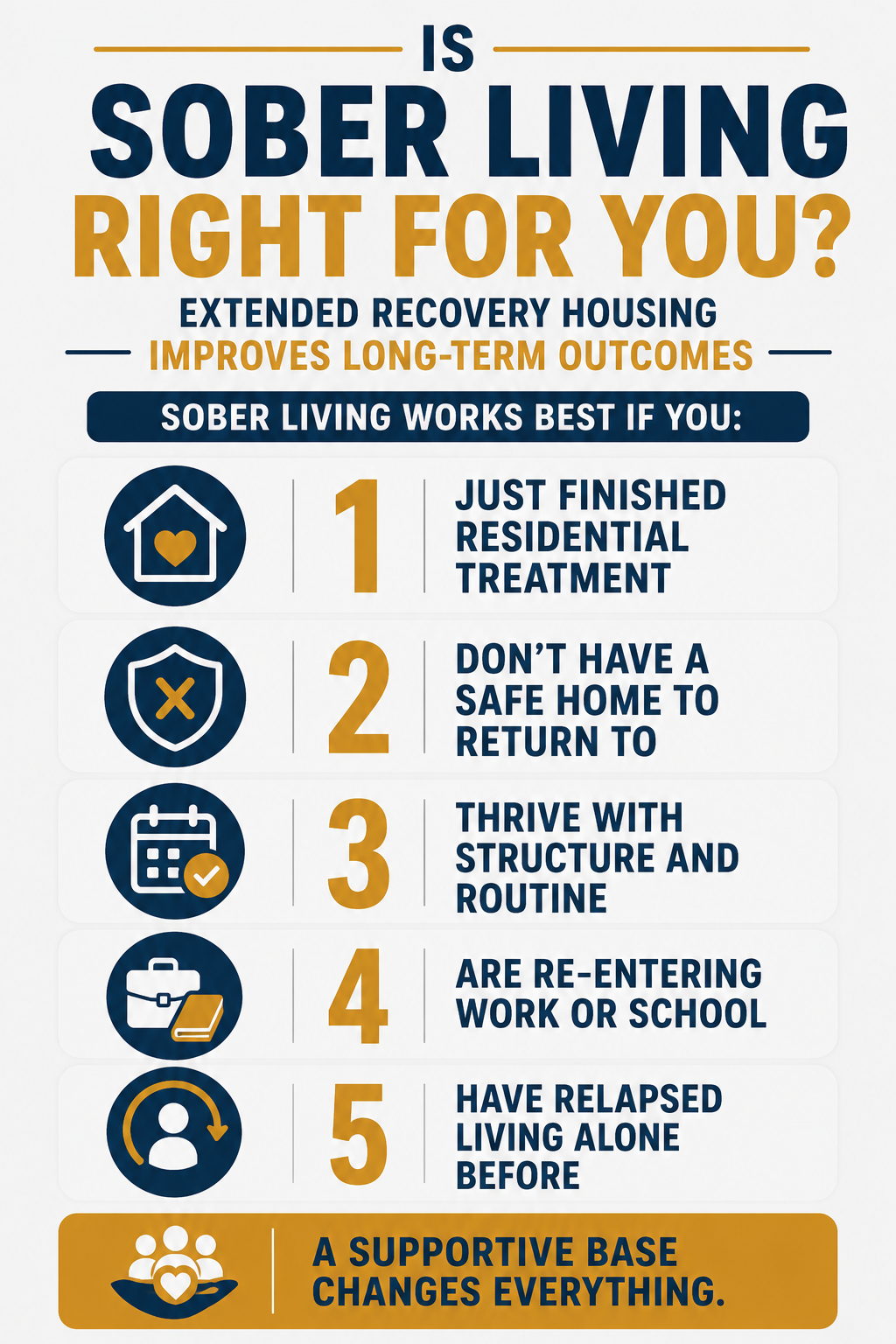
Sober living housing tends to make the most difference if you:
- Have completed residential care: The step-down from intensive care to independent living often feels big, but sober living housing can make the transition feel easier and more manageable.
- Don’t have a stable home environment to return to: If the place you’d be returning to isn’t safe or supportive of your sobriety, recovery housing offers a sense of stability post-treatment.
- Thrive with more structure: The early recovery process is usually made easier when your environment supports you with clear expectations, consistent routines, and people around you who all share the same goal.
- Are re-entering work and school environments: Rebuilding your life can feel more manageable when you have a supportive base to come back home to each day.
- Have experienced relapse: If living alone in the past has been difficult, a community-based environment with built-in accountability may give you the boost you need to keep momentum going during recovery.
While sober living homes can be beneficial to many people going through recovery, it isn’t always clear what life will look like in one of these houses. That’s why the next section explores what to expect.
What to Expect in a Sober Living House
Many people considering sober living in Orange County are often surprised by how comfortable and “normal” a sober living house feels the first time they walk in. For instance, you might find people cooking, watching television, coming home after work, or talking around the kitchen table.
Still, the expectations are clearly laid out from the first day you arrive. Every reputable sober living home operates with a well-defined set of rules that residents must agree to as a condition of being able to stay.
The following sections look at some of the common house rules and what daily life looks like in sober living housing.
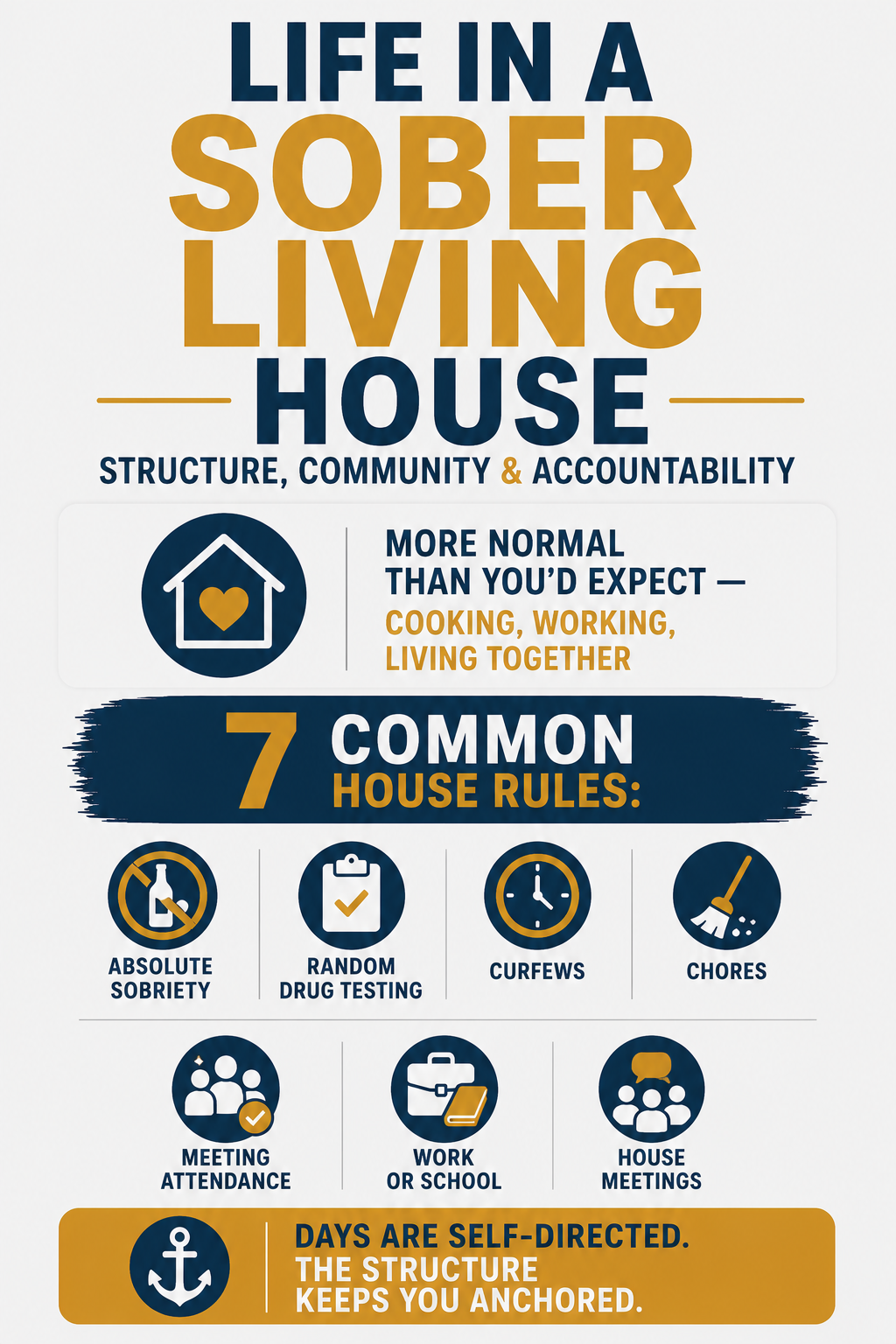
Typical House Rules
Specific rules vary between locations, yet the core expectations of sober living homes in Orange County tend to be fairly consistent and often include the following:
- Absolute sobriety: No alcohol or drugs of any kind are allowed.
- Random drug testing: Many homes test their residents regularly.
- Curfews: Set hours are a common feature, especially early in the stages of recovery. However, these might become more flexible as residents settle into their routines.
- Chores and household responsibilities: House residents all have a role in maintaining the upkeep of the home, which also goes towards building accountability and creating a sense of routine.
- Meeting attendance: Sober living homes usually require regular participation in 12-step or recovery-oriented meetings.
- Attending work or school: Homes generally expect residents to either be employed, enrolled in educational activities, or actively seeking work.
- Attending house meetings: Regular group check-ins are commonly held to keep everyone communicating and supportive of their recovery journeys.
Daily Life
Day-to-day life in sober living is often self-directed; there’s no schedule to keep, and you’ll manage your own time.
Your room might be shared or private, depending on the home and overall cost structure. Also, common areas, a shared kitchen, and additional amenities might be included in the overall package in some Orange County sober living homes. There is also typically a house manager present or available most of the time, providing oversight and guidance as needed.
Most residents find the sense of community to be helpful for recovery. But how do you find good-quality recovery housing? We cover this in the next section.
How to Find Quality Sober Living
Like anything else, the quality of homes offering sober living in Orange County depends on several factors. Many houses are well-run, structured environments with supportive oversight. However, others may be poorly managed, and a bad placement can damage a person’s recovery at a very vulnerable time.
Knowing what to look for and doing your homework can make a big difference. When looking for sober living arrangements, be sure to find out about:
- NARR certification: The National Alliance for Recovery Residences (NARR) sets clear standards for recovery housing. So, look for homes that hold NARR certification or are affiliated with a state-level member organization.3
- California DHCS licensing: Some homes have licensing via the California Department of Health Care Services (DHCS), which indicates a specific level of oversight that an unlicensed home won’t have.
- Seeing the house before you commit: Visit the home in person if you can. Pay attention to the overall condition of the property, the atmosphere, and whether the current residents seem happy and stable.
- Their policies: You may want to ask questions about how drug testing is handled, what happens if someone relapses, or whether meeting requirements are enforced. A well-run home will answer all your questions without hesitation or avoidance.
- Their reputation: Online reviews can be helpful. You may also want to ask your treatment provider what they think about the home you’re considering.
- The costs: It’s useful to understand exactly what you’ll be paying for, how often, and what’s included.
- Staffing and general oversight: You might want to ask who manages the house on a day-to-day basis, how you can reach someone outside regular hours, or any other questions you may have.
While many houses are reputable, there are some red flags to watch out for, which we discuss next.
Red Flags to Watch For
Unfortunately, not every home that calls itself sober living is doing so responsibly. There are a few warning signs to be aware of before you start visiting properties to consider.
One of the biggest red flags is a home that doesn’t have a drug testing policy or clear consequences for using substances. Accountability is a large part of sober living, and a home that isn’t reinforcing this isn’t providing what’s advertised.
Equally, if you are being pressured into signing a contract before you’ve toured the house, it’s advised to slow things down and reconsider.
Another warning sign is a house being overcrowded or poorly maintained, which may be a sign of larger issues with how the home is run. An absent owner or house manager is a red flag – someone should always be reachable and present when you need them.
Additionally, billing irregularities can indicate an issue. If a home seems preoccupied with your payments, offers enrollment incentives, or the financial arrangement feels confusing, then trust your gut and do some more research before committing to a home.
Cost of Sober Living in Orange County
The sober living cost in Orange County covers a wide range of situations, and what you pay tends to reflect the type of room, the location, and the amenities on offer.
So, a shared room typically costs between $800 and $1,500 per month, while private rooms generally start at around $1,500 each month and may reach $3,000. At the higher end of the market, luxury sober living properties with premium amenities like a pool or private bathroom can cost more than $5,000 per month.
Most homes also require a deposit to be paid upfront, which is usually equivalent to the first week’s rent.
It’s worth keeping in mind that most sober living is not covered by insurance as it’s classed as housing rather than treatment. If finances are feeling like a barrier, it’s worth asking about scholarships or reduced rates, as some locations offer sliding scale options or other avenues to pursue.
However, cost shouldn’t be the only factor when it comes to your living situation. A mid-range home with strong structure and good oversight will help your recovery process more than one that looks impressive but lacks substance.
With a clearer idea of what sober living housing involves, let’s take a closer look at what South Orange County can offer.
Sober Living in South Orange County
If you’re looking for sober living, San Juan Capistrano is often the ideal place to look. However, there are many recovery-based housing options in Orange County, in places such as Dana Point, San Clemente, Laguna Niguel, and Mission Viejo. If you are finishing residential treatment in these areas, staying local may help you maintain the relationships and routines you’ve built up during residential treatment.
The beach communities throughout South Orange County also naturally lend themselves to a recovery-friendly lifestyle, with access to the coast and outdoor activities, along with a generally health-conscious culture.
On top of this, Alcoholics Anonymous (AA) and Narcotics Anonymous (NA) meetings are regularly scheduled throughout the region, making finding a home and a consistent meeting schedule easier.
If you’re stepping down into outpatient care, the close proximity to several treatment centers can also help you to keep a sense of continuity in your treatment.
When you complete treatment at A Better Life Recovery, our admissions team can provide you with sober living recommendations based on your unique situation, needs, budget, and goals. Reach out to us today.
Frequently Asked Questions About Sober Living in Orange County
How Long Should I Stay in Sober Living?
It truly depends on your situation. Most recovery specialists suggest staying at least a few months, with the research generally supporting at least six months to produce better outcomes.4
A stable support network, consistency with work or school, and solid recovery habits and skills can help you feel confident about living independently sober.
Can I Work While Living in Sober Housing?
Yes. In fact, most sober living environments expect you to be employed, enrolled in school, or actively seeking work. Having a job and routines are generally stabilizing in the early days of recovery, and sober living can support you to re-engage with these aspects of your daily life.
What Happens if I Relapse?
It’s worthwhile asking this question of the housing provider you are considering before you commit to living there. Some places have a zero-tolerance policy on substance use and will ask you to leave if you relapse. However, some settings will allow you to return to the house again after completing a detox or short treatment stay, so long as you remain committed to recovery.
Does Insurance Cover Sober Living?
Unfortunately, it usually does not. Sober living is not considered to be a clinical treatment, meaning most insurance plans do not cover it. Make sure you understand the cost associated with recovery housing and ask any questions you may have before signing a contract.
References
- Vilsaint, C. L., Tansey, A. G., Hennessy, E. A., Eddie, D., Hoffman, L. A., & Kelly, J. F. (2025). Recovery housing for substance use disorder: a systematic review. Frontiers in Public Health, 13. https://doi.org/10.3389/fpubh.2025.1506412
- Jason, L. A., Salina, D., & Ram, D. (2015). Oxford recovery housing: Length of stay correlated with improved outcomes for women previously involved with the criminal justice system. Substance Abuse, 37(1), 248–254. https://doi.org/10.1080/08897077.2015.1037946
- National Alliance for Recovery Residences. (n.d.). Standards – National Alliance for Recovery Residences. https://narronline.org/standards/
- Subbaraman, M. S., Mahoney, E., Mericle, A., & Polcin, D. (2023, September 3). Six-month length of stay associated with better recovery outcomes among residents of sober living houses. The American journal of drug and alcohol abuse. https://pmc.ncbi.nlm.nih.gov/articles/PMC12841932/
CONTACT NOW


info@abetterliferecovery.com

Address
30310 Rancho Viejo Rd.
San Juan Capistrano, CA, 92675
WE ARE FULLY LICENSED AND ACCREDITED