Life After Rehab in Orange County
Finishing addiction treatment is a major accomplishment, no matter the circumstances. It takes courage and strength to begin recovery treatment, along with true commitment and dedication to see it through.
But what comes next can feel confusing for many people. Life after rehab doesn’t come with a clear guide, and the weeks following discharge can bring a mix of relief, hope, and nervousness as you re-enter the outside world.
Yet transitioning from rehab back into your home life is one of the most important steps in the recovery process. The work you’ve done in treatment creates a foundation that you can build on going forward. Plus, the support, habits, planning, and self-awareness you’ve developed in the treatment program will be crucial for long-term healing.

The good news is that you don’t have to be on this recovery journey alone. Orange County has a strong recovery community, and there are many practical steps you can take to make your transition from rehab much more manageable. A Better Life Recovery proudly supports all our clients with thoughtful, collaborative aftercare plans and opportunities for engagement, long after formal treatment ends.
On this page, we’ll guide you through what to expect after rehab, including:
-
-
- The importance of the first 90 days recovery
- Your aftercare plan
- Building your support network
- Housing and the transition from rehab
- Building sober life while returning to work or school
- Navigating relationships
- Early recovery tips for managing cravings and triggers
- Frequently asked questions about staying sober after treatment
-
Life After Rehab: The First 90 Days
Many people in active recovery say that the first 90 days can be hard after leaving rehab, especially given the focus, momentum, and contained environment of residential treatment.
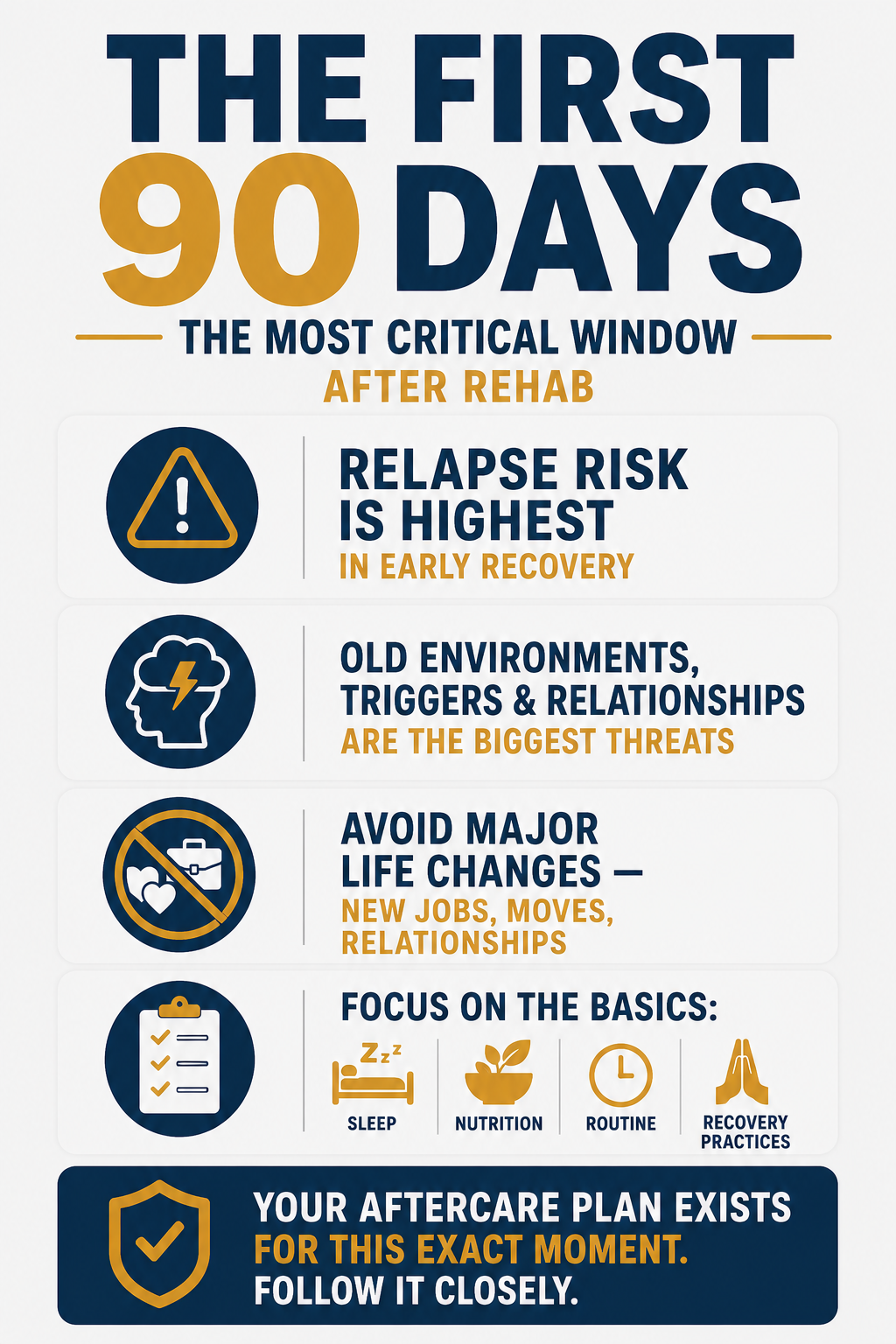
Also, the risk of relapse tends to be higher during the early recovery phase.1 This is often because of several contributing factors, including:
- The coping strategies you’ve learned in treatment are still new
- You may encounter old environments, relationships, and triggers when you leave rehab
- Your brain is still recalibrating and stabilizing after addiction
Because the first 90 days of recovery can be a vulnerable time, it’s often advisable to avoid major life changes during this period. The reason for this is that new relationships, job changes, and major moves may add extra stress while you’re working on staying sober after treatment. So, it may help to keep your focus intentionally narrow – prioritizing sleep, nutrition, routine, and recovery practices goes a long way to support recovery.
Still, your aftercare plan is built to support you through this critical time, and takes into account the unique vulnerabilities and needs you identified during your time in formal treatment. Following your plan closely, especially in the early weeks when motivation can fluctuate, is one of the best things you can do to protect your progress and recovery.
We explore aftercare planning in more detail in the next section.
Your Aftercare Plan
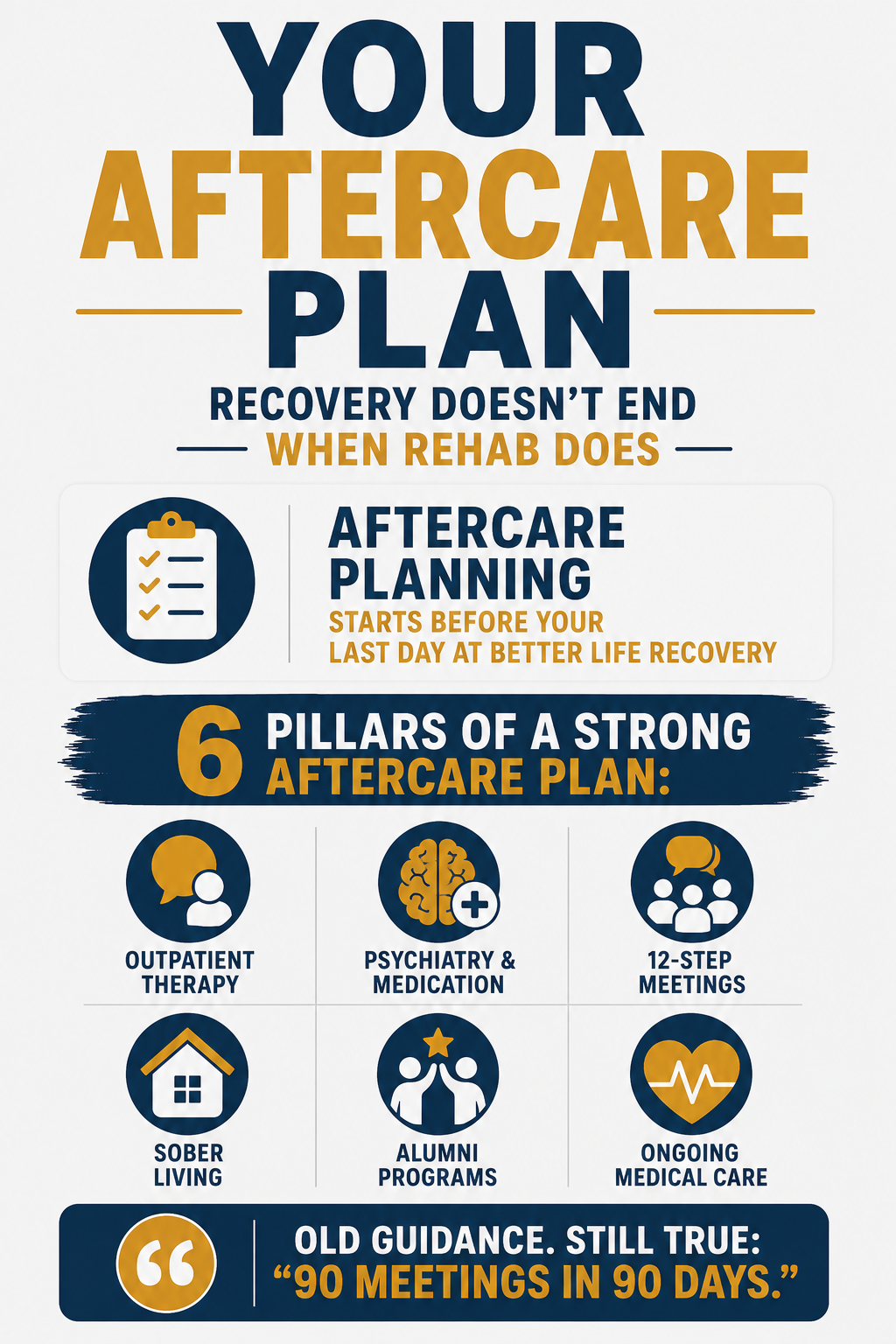
Completing residential or inpatient care isn’t the end of treatment. An aftercare plan helps build a bridge between structured treatment and the relative freedom of everyday life after rehab, which can directly influence long-term recovery.
A Better Life Recovery starts the discharge planning and aftercare process before your last day at rehab to make sure you have a clear, actionable roadmap for when you leave our care.
Most aftercare plans include several of the following elements:
- Outpatient therapy: Continuing with individual or group sessions keeps the momentum going after inpatient care ends.
- Psychiatry and medication management appointments: If medications were part of your treatment, ongoing support ensures monitoring and adjustments are made as and when they are needed.
- 12-step or support groups: Regular meetings can bring fellowship and a recovery community into your life to support you while you focus on sobriety. The old guidance about attending meetings – “90 meetings in 90 days” – has stood the test of time, with good reason. This is because consistent contact with a recovery community can help keep you anchored and provide somewhere to turn when difficulties come up.
- Sober living: For those whose home environments might pose a risk to early recovery, structured sober living arrangements offer peer support and accountability to post-treatment life.
- Alumni programs: Staying connected to your initial providers and treatment program peers can help your relationships continue after leaving rehab.
- Ongoing medical care: Addressing any physical health needs supports the overall recovery process.
Your aftercare program is there to help you through recovery, so treat your plan as a non-negotiable. You can revisit and revise it with your treatment team as your needs evolve over time.
Having a support network can help you through these early days of recovery, which we discuss next.
Building Your Support Network
Isolation is one of the most consistent warning signs of relapse in the early stages of recovery.2 This is because addiction often thrives in private. While relapse can be part of the recovery process for many people, who you surround yourself with can greatly influence your circumstances.
Staying in contact is vital for ongoing healing. That is why your sponsor and your therapist are key contacts in the early days of recovery. They can serve as a buffer against the thoughts and quiet behaviors that can come before a relapse.
Having a sponsor or mentor with experience in recovery can help you navigate the challenges of life after rehab and remain accountable. These relationships usually work best if they’re consistent and honest. You don’t have to reach out only in an emergency – prioritize these relationships and let them support you.
Additionally, your therapist can support you through the challenges of early recovery, such as relationship difficulties, anxiety, or questions about your identity.
While sober friendships may take time to build, surrounding yourself with people who understand and support you is vital for recovery. Orange County has an active community to tap into, filled with meetings, social events, volunteer networks, and athletic groups.
When it comes to family dynamics, there’s no doubt that revisiting relationships might be complicated. However, rebuilding these connections (when it’s safe to do so) while setting appropriate boundaries can strengthen your recovery.
Building a sturdy support network is important to bolster you when needed and celebrate your successes alongside you.
Housing is a question that often comes up when people are discharged from treatment programs. The next section covers some of the main points to consider about your living situation on leaving rehab.
Housing After Rehab
Your physical environment shapes your daily stress levels, the people you spend time with, and the triggers you may encounter – all of which can impact your recovery.3
One housing option that many people leaving residential treatment consider is a “sober living home.” These help many people leaving residential treatment transition into a stable and supportive living environment that can help them stay on track.
In contrast, if home is a place where you used substances (or where you had relationships that enabled substance use), returning there may increase the risk of relapse.
If you are returning home, it often helps to consider your routines, who has access to your space, and what’s kept in the house. Living alone in early recovery is possible, but the absence of built-in accountability can make it feel much harder. For this reason, sober roommates and having social support can offer the daily connection that keeps you focused on healing while navigating life after rehab.
Where you sleep at night isn’t the only thing to consider when returning to life outside of rehab – you may want to return to your previous job or continue your college studies. The next section looks at points to consider when returning to work or school.
Returning to Work or School
Returning to work or education can be enlivening and something to celebrate, but it’s important to consider the timing.
Rushing back before you’re ready may add unnecessary pressure and stress, so it might help to keep in mind the following points:
- Structure helps: Keeping regular schedules and clear responsibilities reinforces the habits you developed in treatment.
- Recovery comes first: If going back to work or school feels destabilizing, it’s often worth waiting a little longer before diving back in. Staying healthy is what matters the most.
- Your environment matters: Be honest with yourself about whether your workplace or school supports your sobriety or makes it harder.
- Some roles carry a higher risk: Jobs involving regular exposure to drugs or alcohol should be carefully considered before returning to that role.
- Most people can return: Going back to a previous role is possible, and many people do it well, especially with the right support.
- Know your rights: The Americans With Disabilities Act (ADA) and the Family and Medical Leave Act (FMLA) offer legal protections for those in recovery.
- Build in recovery practices: Ensure you protect time for your recovery meetings, therapy appointments, and self-care.
Part of returning to “normal” life outside of the treatment facility often involves interacting with people from your past. The next section explores how to navigate relationships in your newly sober life.
Navigating Relationships
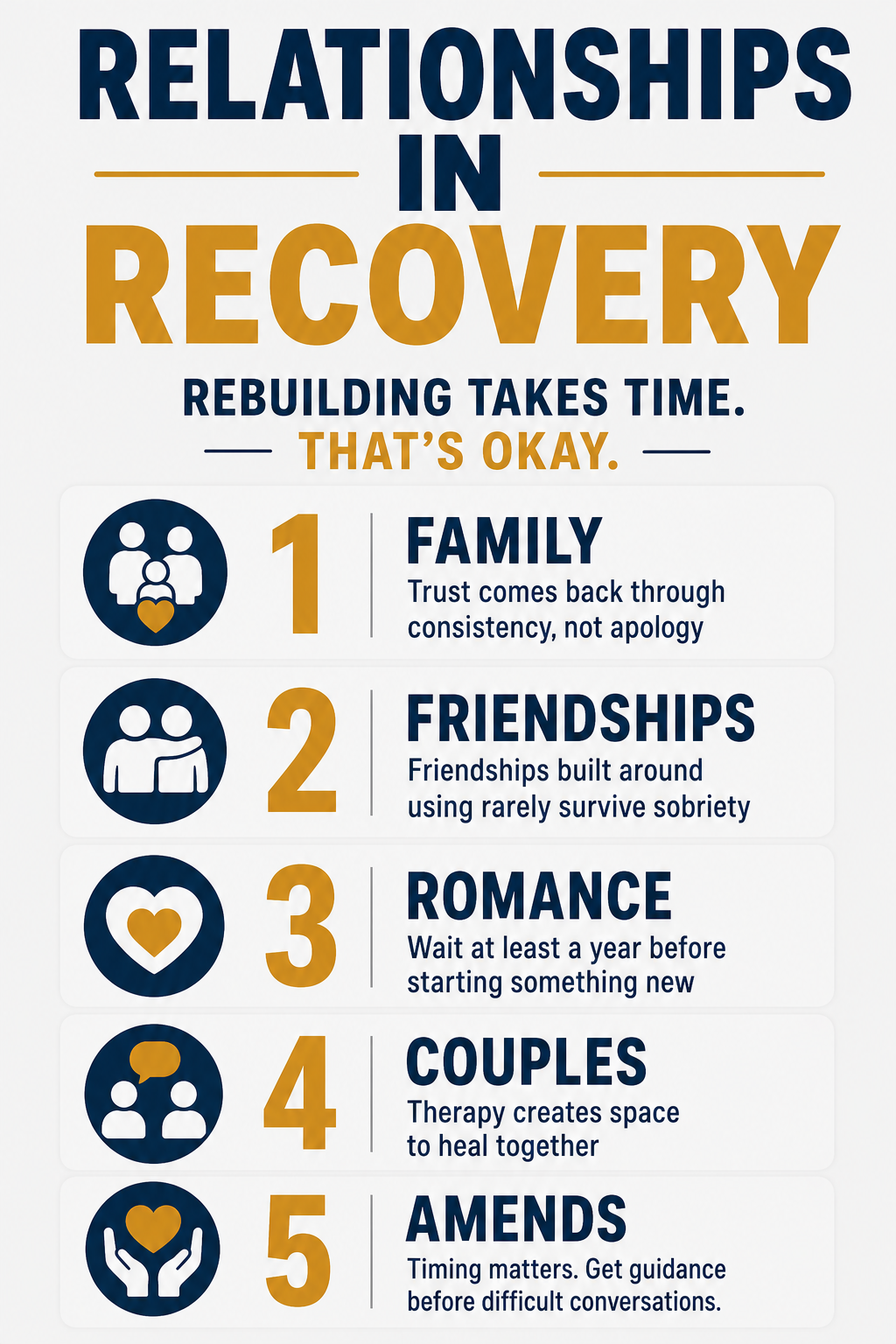
The early recovery period can bring many feelings to the surface, sometimes at a pace that feels faster than you were ready for. Remember that rebuilding relationships takes time and may look different depending on your circumstances. The following sections offer guidance on rebuilding these connections.
Family
Family relationships are often where the most repair is needed, and the most patience is required. Trust doesn’t necessarily come back after a few good weeks – it comes back with consistently showing up and making healthy choices.
Friendships
Some friendships will survive the recovery process. However, the ones built around using drugs or alcohol rarely hold up in the long term.
Distancing yourself from people who still actively use substances shows your commitment to early recovery, while new sober friendships offer opportunities to connect with people who understand and celebrate your choices.
Romantic Relationships
Often, the general guidance in recovery is to wait at least a year before entering into a new romantic relationship. Life after rehab demands a lot of energy, and adding the intensity of a new relationship may silently destabilize your recovery.
If you’re already in a relationship, couples therapy can provide a valuable space for both of you to work through the impact of addiction.
Making Amends
Making amends is a meaningful part of recovery, and also one that benefits from guidance and timing. The impulse to fix everything right now is understandable, but some conversations benefit from waiting for the right time and place.
Even if you distance yourself from people who actively use substances, triggers and cravings can still occur. We look at ways to manage these cravings and triggers next.
Managing Triggers and Cravings
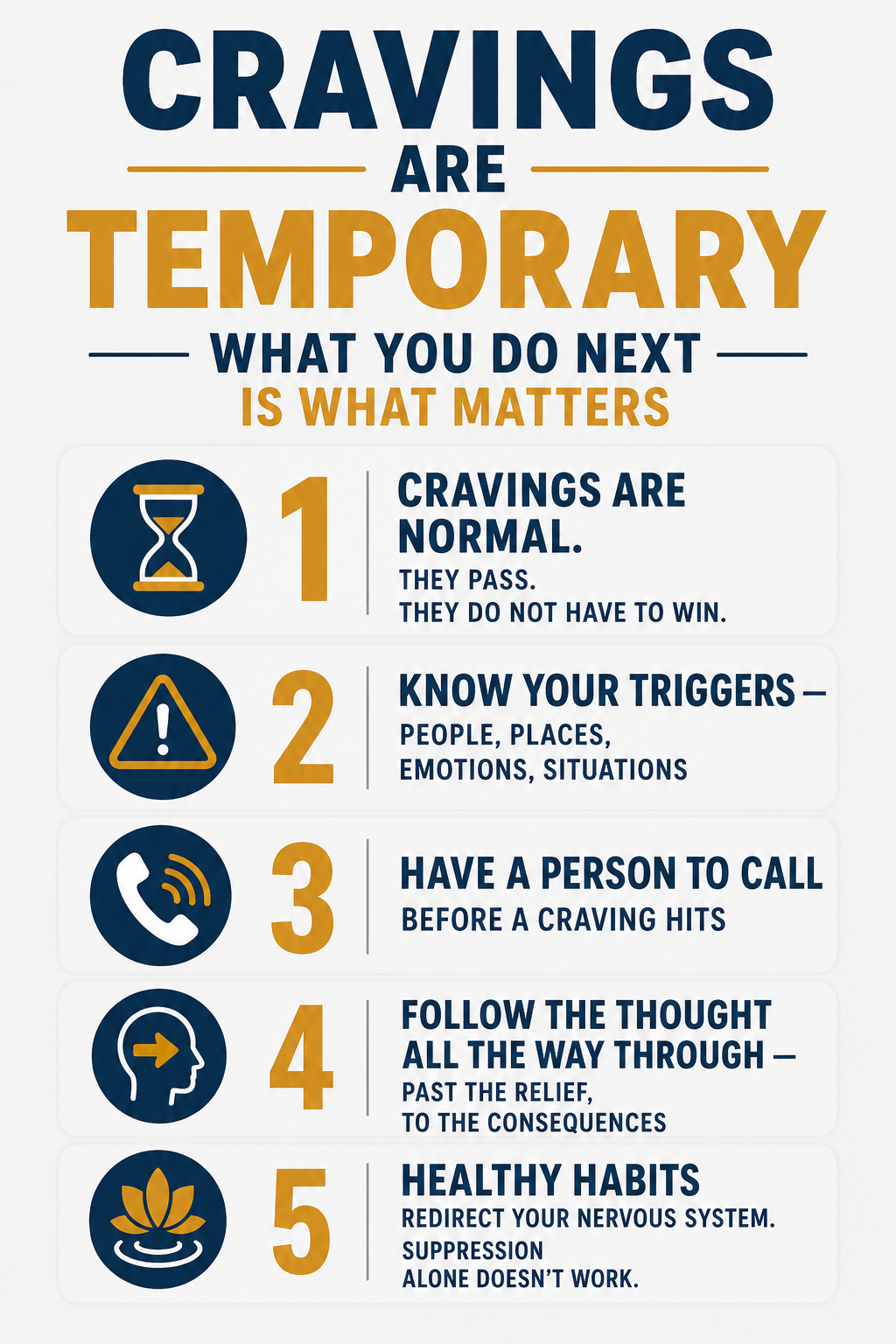
Experiencing cravings in early recovery is predictable, normal, and – perhaps most importantly – temporary.4 Making sure a craving doesn’t turn into a relapse is often about what happens in the space between your craving and your response.
For instance, you could utilize the tools that you’ve learned in treatment to help you respond in a healthy and helpful way. Or, you could make sure you know who to lean on when a craving hits, as it can be difficult to think clearly when you’re feeling emotional. Healthy coping habits redirect your nervous system instead of trying to simply suppress the urge or craving.
It may be helpful to know that cravings tend to distort time, making the next drink or drug feel all-consuming. In these cases, it can help to mentally follow the thought of using substances all the way through to the consequences, rather than stopping at the feeling of relief.
Also, it helps to know your triggers, for instance, the people, places, emotions, and situations that your brain has associated with drug and alcohol use. Avoiding high-risk triggers whenever possible can protect you from falling back into using substances.
A Better Life Recovery: Finding Purpose and Meaning in Life After Rehab
Contrary to popular belief, sobriety and recovery aren’t just about turning away from substance use. They are about building a life that’s worth staying present for. When your daily existence feels purposeful and connected, the pull of old habits tends to weaken.
In those initial 90 days of recovery, it can be helpful to start with what you already know about yourself from treatment. Many people in early recovery find themselves returning to interests and passions that addiction pushed away, and Orange County offers endless access to enjoyable activities and pursuits.
Spirituality and making space for meaningful activities in your life can support you in creating a relationship to something larger than the moment at hand and propel your momentum forward.
A Better Life Recovery believes that treatment is only the beginning of the recovery process. That’s why we’re dedicated to supporting you and your loved ones as you build a life that makes recovery worth protecting.
Frequently Asked Questions About Life After Rehab
When Does Life After Rehab Get Easier?
Many people notice major improvements within the first three months of leaving residential rehab. The first month is often the most challenging, with cravings reducing alongside new routines and priorities. Recovery tends to have a compounding quality – the further you get, the more there is to build upon.
Should I Stay in Orange County After Rehab?
Orange County and Southern California have an active, expansive community that supports aftercare recovery in several ways, and sometimes the home environment can actually be a hurdle to your healing. So, it pays to be honest with yourself about whether or not the place you’re going back to will support your long-term recovery.
What if I Relapse After Rehab?
Having a relapse doesn’t mean you failed, and it doesn’t mean your recovery is over. If it happens, the most important thing is to reach out immediately to your sponsor, therapist, or treatment facility directly. Many people have experienced a relapse, but what matters most is what you do next.
How Do I Make Sober Friends in Orange County?
Keep your eyes peeled for opportunities around you. For example, show up to recovery meetings or find ways to participate in community opportunities that expand your social circle and chances to connect.
References
- Kitzinger, R. H., Gardner, J. A., Moran, M., Celkos, C., Fasano, N., Linares, E., Muthee, J., & Royzner, G. (2023). Habits and Routines of Adults in Early Recovery From Substance Use Disorder: Clinical and Research Implications From a Mixed Methodology Exploratory Study. Substance Abuse: Research and Treatment, 17, 117822182311538. https://doi.org/10.1177/11782218231153843
- Melemis, S. M. (2015). Relapse Prevention and the Five Rules of Recovery. The Yale Journal of Biology and Medicine, 88(3), 325. https://pmc.ncbi.nlm.nih.gov/articles/PMC4553654/
- Sui, T. Y., McDermott, S., Harris, B., & Hsin, H. (2023). The impact of physical environments on outpatient mental health recovery: A design-oriented qualitative study of patient perspectives. PLOS ONE, 18(4), e0283962. https://doi.org/10.1371/journal.pone.0283962
- Baillet, E., Auriacombe, M., Romao, C., Garnier, H., Gauld, C., Vacher, C., Swendsen, J., Fatseas, M., & Serre, F. (2024). Craving changes in first 14 days of addiction treatment: an outcome predictor of 5 years substance use status? Translational Psychiatry, 14(1). https://doi.org/10.1038/s41398-024-03193-3
CONTACT NOW


info@abetterliferecovery.com

Address
30310 Rancho Viejo Rd.
San Juan Capistrano, CA, 92675
WE ARE FULLY LICENSED AND ACCREDITED