The Opioid Crisis in Orange County
The rise of the opioid crisis started due to an overuse of prescription painkillers initially used for legitimate pain control purposes. However, illicit drugs like heroin and fentanyl, which are 50 to 100 times more potent than opioids, have become the largest contributor to opioid-related deaths.
Opioid addiction is a completely treatable medical condition, but hundreds of people in Orange County still lose a loved one to it every single year. Yet we can only work towards addressing the issue if we understand its true impact first.
So, on this page, you will find the latest statistics on opioid-related deaths and hospitalizations in Orange County. You’ll also learn about the demographics of those most affected by it, the contribution of fentanyl to these numbers, and what is being done to control the crisis in the county.

Understanding the Opioid Crisis
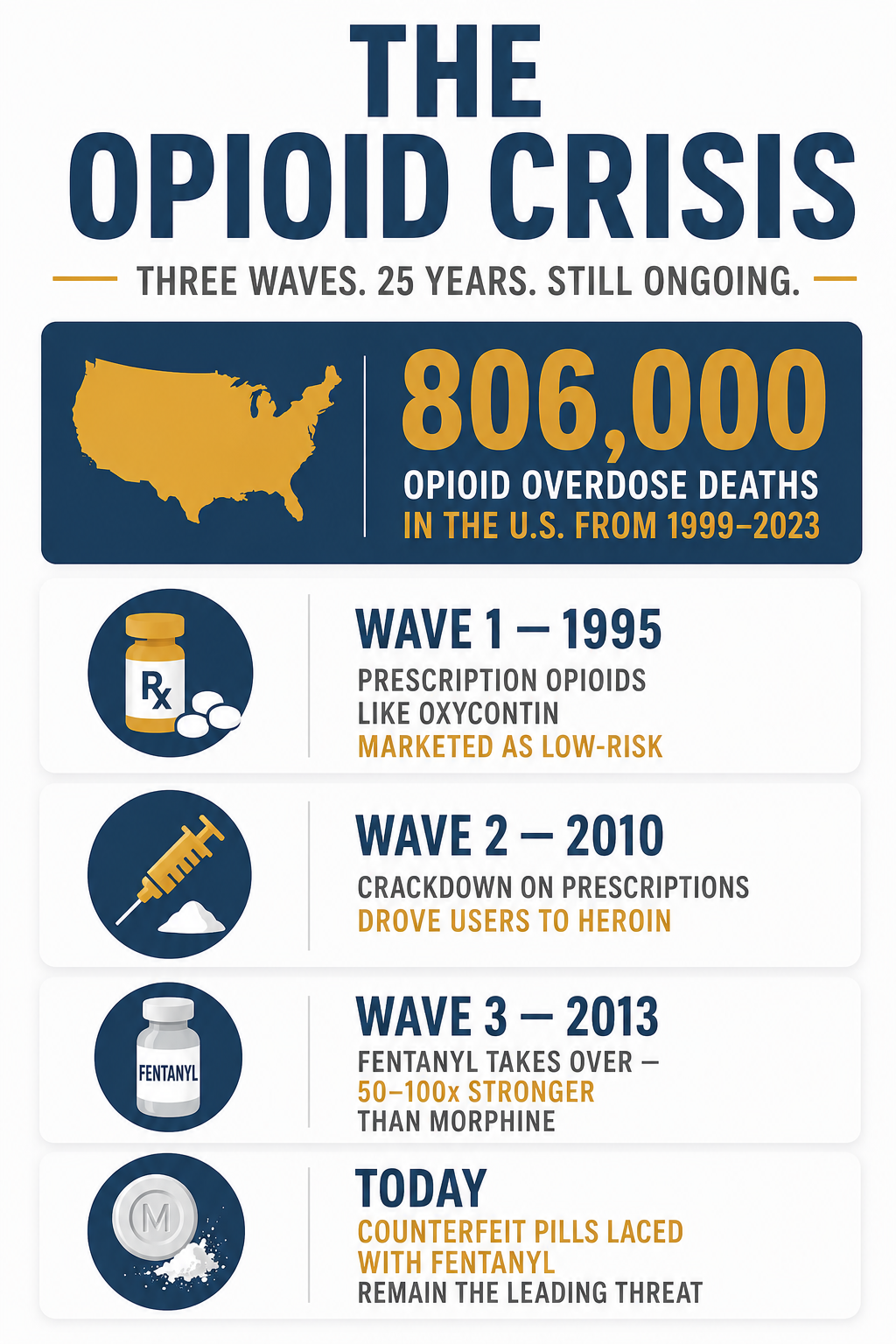
The Centers for Disease Control and Prevention (CDC) reports that 806,000 people have died due to an opioid overdose from 1999 to 2023. Opioid-overdose deaths have occurred in three different waves in the United States.2
The beginning of the crisis was seen back in 1995 when OxyContin was first approved as a prescription opioid for pain control. The drug was, however, falsely marked for having a low addiction potential. The use of many similar natural and semi-synthetic opioids (for example, Vicodin and Percocet) and methadone increased in the 90s, which resulted in an increasing trend of opioid overdose deaths.
The second opioid crisis wave was seen around 2010. This was when the rising death rates due to prescription opioids led to tighter control on their accessibility. During this wave, a very high number of drug overdoses attributed to heroin were reported since prescription opioids were difficult to get.
The third wave of the opioid crisis began in 2013 with an increasing number of deaths due to fentanyl. Fentanyl is a highly potent synthetic opioid that is 50-100 times stronger than morphine and has a stronger abuse potential.
This third wave currently persists; illegally made fentanyl and fentanyl analogs are sold in powder form or pressed into counterfeit pills. They can also have other drugs mixed into them.
Every state and county in the U.S. has been affected by the opioid crisis, and Orange County is no exception. However, there has been a decline in deaths from opioid overdose in recent years. The following is an overview of what the data sources say about opioid overdose deaths in Orange County.
Opioid Overdose Deaths and Hospitalizations in Orange County
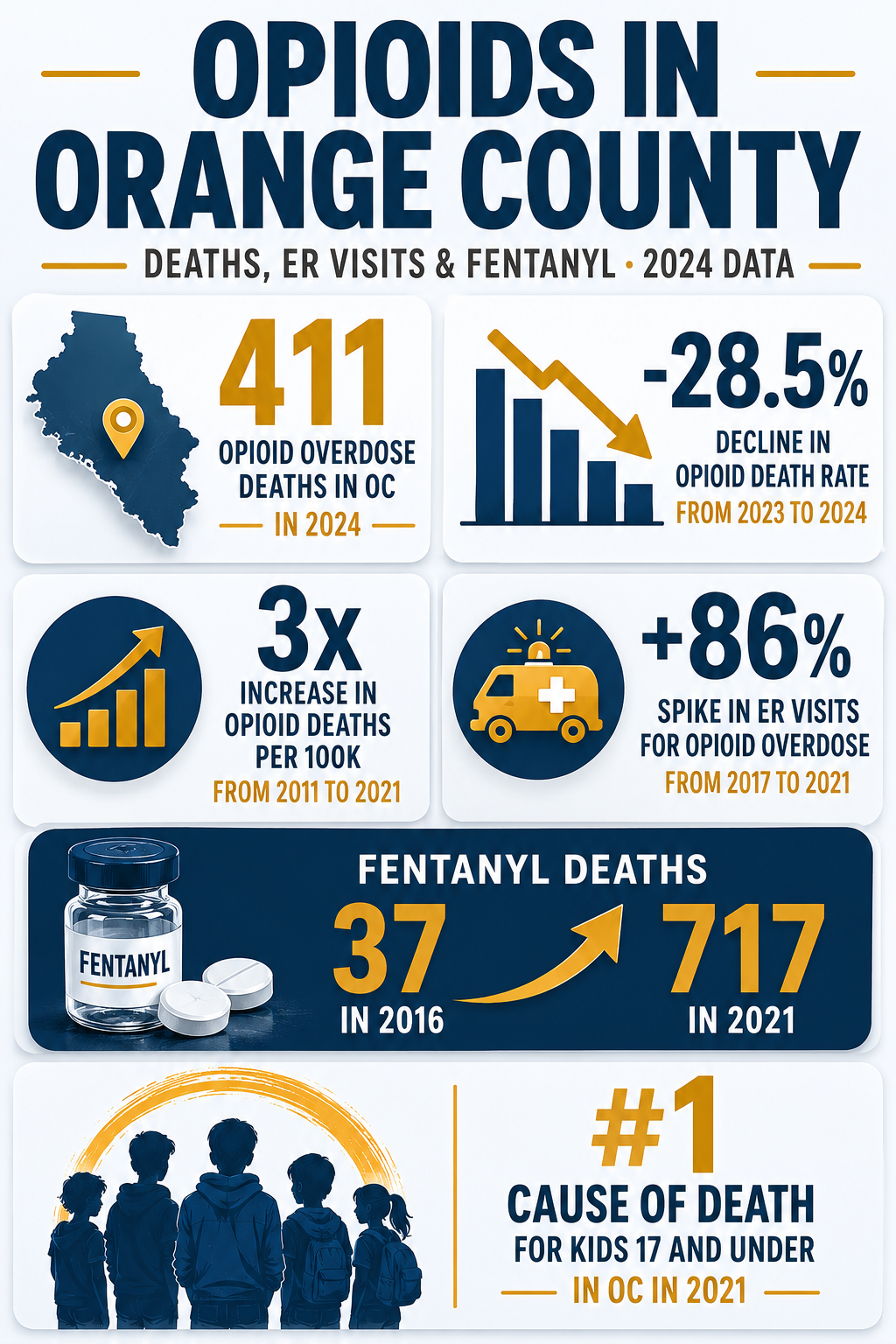
California Department of Public Health reports that there were 411 opioid-related overdose deaths in Orange County in 2024. The annual age-adjusted mortality rate due to opioids in 2024 was 13.73 per 100,000 people, which is a 28.54% decline from 2023.3
In 2022, the Orange County Health Care Agency published a report on opioid-related morbidity and mortality in Orange County for the year.4 Approximately eight deaths per 100,000 individuals were reported in Orange County in 2011. But by 2021, this number had increased about three times to 24 deaths per 100,000 people. Additionally, the average death rate due to opioids in Orange County is higher than the California state average, at 19 deaths per 100,000 people in 2021.
The Orange County Health Care Agency also reports an 86% increase in emergency department (ED) visits due to opioid overdoses and poisonings from 2017 to 2021. The rate of ED visits was 25.4 per 100,000 persons, but by 2021, it had risen to 47.2 per 100,000 people. The majority of this hike was reported in 2020 and 2021.
Further, opioid-related hospitalizations were relatively stable from 2017 to 2021, but 2021 still reported the highest rate of hospitalizations at 10.5 per 100,000 individuals in Orange County.
Sadly, the Orange County Grand Jury report from 2022-2023 reported a shocking increase in fentanyl related deaths, from 37 deaths in 2016 to 717 deaths in 2021. And fentanyl was the leading cause of death in coroner-related cases for children 17 years and under in 2021.5
Who Is Affected by the Opioid Crisis?
The Orange County Health Care Agency report shows us that the opioid crisis does not discriminate. It affects people of all ages, demographics, races, income levels, and so on.6
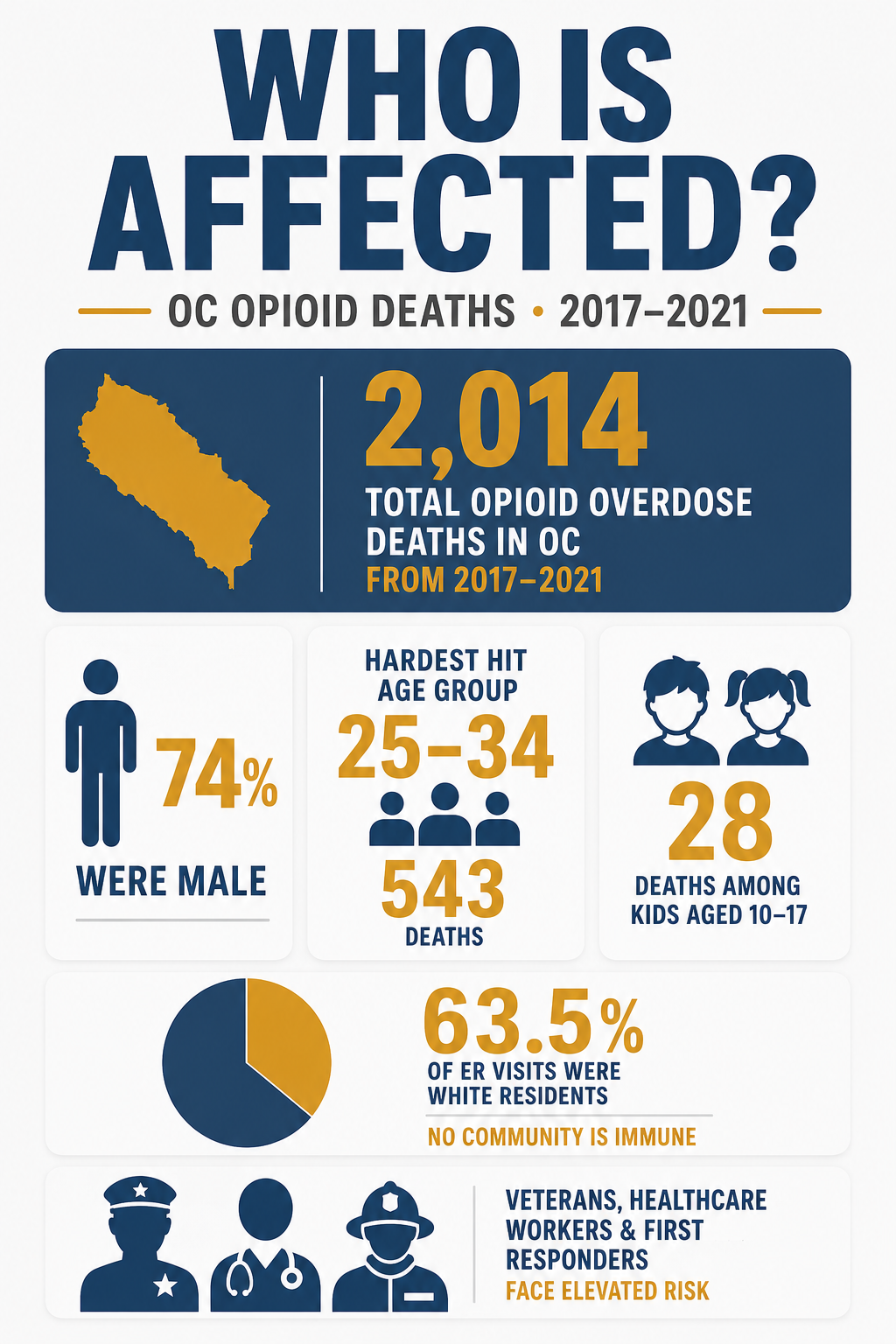
The report mentioned that out of 2,014 total opioid-related overdose deaths between 2017 and 2021, 73.9% (1,488 deaths) were males, while 26.1% (526 deaths) were females.
Young adults aged 25–34 had the highest proportion of mortality due to opioid overdoses. But the age-group-wise distribution for opioid-related deaths was as follows.
Age-Group Distribution of Opioid-Related Deaths:6
- 0–9 years: 1 death
- 10–17 years: 28 deaths
- 18–24 years: 263 deaths
- 25–34 years: 543 deaths
- 35–44 years: 387 deaths
- 45–54 years: 342 deaths
- 55–64 years: 338 deaths
- 65+ years: 112 deaths
Additionally, between 2017 and 2023, a total of 5,148 opioid-related ED visits were recorded, out of which:
- 63.5% (3,269 individuals) were White
- 26.4% (1,360 individuals) were Hispanic/Latino
- 2.1% (107 individuals) were Asian/Pacific Islander (API)
- 1.9% (92 individuals) were Black
- 4.2% (218 individuals) were people from other races
Many of the opioid addictions ending up in an overdose begin from a legitimate healthcare prescription for pain control after surgery, injury, cancer, or chronic pain conditions. Occasionally, recreational street drug use may also lead to a full-blown addiction.
Young individuals are at particular risk of falling prey to fentanyl-laced pills. Nowadays, fentanyl is being mixed into fake pills and white powders, and it is almost impossible to tell the difference between a real and a fake pill. Fentanyl has no color and no characteristic smell or taste that could indicate a laced pill.
Aside from young people, veterans, healthcare workers, and first responders are also at an elevated risk of fentanyl overdose simply because they have easy access to the drug. So, even affluent communities in Orange County are not immune to the opioid crisis.
The Fentanyl Factor
Fentanyl is a potent opioid, very similar to morphine, but about 50-100 times more powerful. It has some legitimate medical uses for severe pain relief, particularly against post-surgical pain and cancer-related pain. But like other opioids, it is very addictive.
A very small amount of fentanyl, as low as the amount you can fit on the tip of a pencil, can have lethal effects. This is the equivalent of about two milligrams of the drug, similar to ten grains of sand. The drug is now found in counterfeit pills alongside other illicit substances like heroin, cocaine, and so on. And since it is so potent, just one such pill can kill a person.
Orange County Health Care Agency reports that every five out of the ten pills tested by the Drug Enforcement Administration (DEA) contain a lethal amount of fentanyl.7
Fortunately, it is possible to detect the presence of fentanyl and its analogues in a person’s body if promptly received at a medical facility. Fentanyl test strips (FTS) are low-cost, rapid drug-checking tools used for this purpose. If detected, an immediate dose of opioid antidote – Naloxone – can be administered to potentially save a person from dying.
Additionally, in November 2025, the Orange County Sheriff’s Department reported that in 2024, 407 fentanyl-related deaths occurred in the county. This means that the number had gone down from 613 deaths in 2023. Although the report for 2025 has not been published yet, the Sheriff reassured that the numbers in 2025 follow a declining trend.8
The Orange County Sheriff also mentioned their stricter enforcement efforts to reduce the fentanyl crisis. For example, in 2024, the narcotics teams in Orange County seized over 184 pounds of fentanyl in powdered form and about 45,300 fentanyl pills.
How Orange County Got Here
Orange County, like the rest of the U.S., experienced all three waves of the opioid crisis. In the 2000s, there was an uncontrolled rate of prescription opioid use due to pill mills and over-prescriptions. These caused many people taking the drug for pain control to slowly get addicted to it.
When the authorities took note of over-prescriptions, tighter controls on prescription opioids were established. However, as a result, those already addicted to prescription drugs turned to illicit opioids, such as heroin.
Additionally, Orange County is located in Southern California, a region notorious for drug trafficking routes that brought heroin and fentanyl to the area. Orange County has also always been regarded as an affluent, safe community. This image may have delayed the time it took for the authorities to take note of the increasing opioid misuse rates.
Fortunately, the opioid crisis was identified in Orange County, and multiple measures were put in place to control it. The results of these efforts are promising, and opioid overdose deaths have started to decline again since 2023.
What’s Being Done in Orange County
The opioid crisis is slowly beginning to die down in Orange County due to a range of active efforts.
Naloxone, the antidote to opioids sold under the brand name “Narcan”, has been made largely available to first responders and community members in Orange County. After the FDA approved medication-assisted treatment for opioid overdoses, expanded access to Suboxone and Methadone, useful for detoxification purposes, has also been made available.
All healthcare providers in Orange County licensed to prescribe controlled substances like potent opioids must check the Controlled Substance Utilization Review and Evaluation System (CURES).9 This is California’s primary tool used to combat “doctor shopping” for opioids. Since many opioid overdoses originate from a legitimate prescription that turns into an addiction, a decrease in unnecessary opioid prescriptions can decrease the mortality burden associated with opioids.
In the last four years, the Orange County Health Care Agency has also launched two social media campaigns against the fentanyl factor. These are:
- The “Life is Greater Than Drugs” campaign: This is targeted at the youth in Orange County to show how fentanyl use can end a life that would otherwise be full of music, sports, artistic, and creative dreams.
- The “Fentanyl is Forever” campaign: This is a mass public awareness campaign for all Orange County residents. It educates families, friends, and providers, as well as supplies them with accessible local services.10
Orange County Sheriff also ensures measures are in place to put a halt to illegal fentanyl trafficking. In 2021, the Sheriff’s Department seized 132.9 pounds of fentanyl and 16,278 pills. This number went up to 428 pounds of fentanyl and 377,327 pill seizures in 2022.5
Getting Help for Opioid Addiction
Chronic opioid addiction is 100% treatable. Even if a person ingests a large quantity of a potent opioid and is brought to a medical facility in time, the antidote Naloxone, administered promptly, can prevent overdose deaths.
The treatment for opioid addiction consists of:
- Medically supervised detox in which a clinician manages your withdrawal symptoms as you stop your opioid intake.
- Medication-assisted treatment (MAT), where a set of medications (such as Suboxone and Vivitrol) approved by the FDA is used to reduce opioid cravings and prevent relapse.
- Psychotherapy, consisting of approaches like cognitive behavioral therapy and trauma therapy, in which you identify your triggers for substance misuse and learn to tackle them.
- Aftercare, consisting of support meetings and sober living tips, once you are stable enough to continue your work or education.
A Better Life Recovery is a specialized addiction treatment center located in San Juan Capistrano that offers all of these treatment services for adults throughout Orange County.
For Families Affected by Opioid Addiction
Every statistic discussed on this page represents a person and their family who found it hard to cope due to what could have been prevented with the right support. If you, or any of your loved ones, are dealing with opioid addiction, you are not in it alone.
Firstly, make sure that you keep an emergency dose of Narcan with you at all times, at home, while traveling, and so on, to reverse any accidental opioid overdose. Next, encourage your family members to learn the signs of opioid overdose so they can promptly act in a moment of need.
And talk about opioid treatment in a non-judgmental manner during casual conversations to break the stigma around addiction, which often prevents people from getting the help they deserve. Also, encourage those who are finding it hard to cope to join the Narcotics Anonymous, Alcoholics Anonymous, and GRASP grief support groups for peer support.
You can also reach out to A Better Life Recovery for compassionate, professional support against addiction today. Our opioid addiction programs treat the whole person, not just the symptoms of substance misuse.
Frequently Asked Questions
If you or a loved one is dealing with an opioid addiction, it’s natural to have questions or concerns about what addiction means and what treatment involves. To help, we’ve provided the following answers to FAQs we commonly receive.
Is Opioid Addiction a Choice or a Disease?
Opioid addiction is a chronic brain disease, as recognized by every major medical organization. Recreational use of the drug is certainly a choice, but addiction to opioids causes changes in the brain chemistry that make stopping use without medical support very difficult.
Can Someone Recover From Opioid Addiction?
Yes. There are millions of success stories where people have recovered from opioid addiction and have lived fulfilling lives. Medication-assisted treatment combined with psychotherapy significantly improves outcomes.
Where Can I Get Narcan in Orange County?
“Narcan”, which is the brand name for Naloxone, is available at many pharmacies in California. You do not need a prescription to get it. A lot of community organizations also distribute Naloxone for free. You can learn more about the local distribution sites in Orange County at the Orange County Health Care Agency website.
References
- Saunders, H., Panchal, N., & Rudowitz, R. (2026, February 24). Opioid Overdose Deaths: National Trends and Variation by Demographics and States. KFF. https://www.kff.org/mental-health/opioid-overdose-deaths-national-trends-and-variation-by-demographics-and-states/
- Centers for Disease Control and Prevention. (2025, June 9). Understanding the opioid overdose epidemic. Overdose Prevention; CDC. https://www.cdc.gov/overdose-prevention/about/understanding-the-opioid-overdose-epidemic.html
- DHCS Opioid Response. (2024). Opioid Overdoses and Approved Naloxone by County – DHCS Opioid Response. https://californiaopioidresponse.org/outcomes/naloxone-distribution-project-data/opioid-overdoses-and-approved-naloxone-by-county/
- Orange County, California – Health Care Agency. (n.d.). Opioid Overdose & Death in Orange County. Www.ochealthinfo.com. https://www.ochealthinfo.com/page/opioid-overdose-death-orange-county
- Orange Council Grand Jury. (2022). 2022-2023 Reports (in order of release) | Orange County Grand Jury. Ocgrandjury.org. https://www.ocgrandjury.org/2022-2023-reports-order-release
- Orange County Health Care Agency. (n.d.). Opioid-related morbidity and mortality in Orange County, 2017-2021. https://www.ochealthinfo.com/sites/healthcare/files/2023-02/Opioid_Overdose_Death_Trends_2017-2021_v04_Web.pdf
- Fentanyl is Forever OC. (2026). Fentanyl Facts. Fentanylisforeveroc.org. https://www.fentanylisforeveroc.org/fentanyl-facts
- Orange County, California – Sheriff’s Department. (2025, November 13). Fentanyl-related deaths in Orange County see five-year low. Ocsheriff.gov. https://ocsheriff.gov/news/fentanyl-related-deaths-orange-county-see-five-year-low
- State of California Department of Justice. (2019). Controlled substance utilization review and evaluation system. State of California – Department of Justice – Office of the Attorney General. https://oag.ca.gov/cures
- Orange County Government. (2023, October 10). OC Health Care Agency launches “Fentanyl is Forever” awareness campaign in Orange County. https://www.ocgov.com/press/oc-health-care-agency-launches-fentanyl-forever-awareness-campaign-orange-county
CONTACT NOW


info@abetterliferecovery.com

Address
30310 Rancho Viejo Rd.
San Juan Capistrano, CA, 92675
WE ARE FULLY LICENSED AND ACCREDITED