Prescription Stimulant Addiction Treatment in Orange County
At A Better Life Recovery in San Juan Capistrano, our Joint Commission-accredited center is built around addiction management. So we provide specialized, evidence-based treatment for prescription stimulant addiction throughout Orange County. We also take care of dual diagnosis care for stimulant use with ADHD and other co-occurring mental health conditions.
Call us now for confidential help against prescription stimulant addiction.
If you’re interested in understanding more about our services, this page explores our approach to prescription stimulant addiction treatment.
Understanding Prescription Stimulant Addiction
Prescription stimulants are medications placed in the highest-restriction drug category by the federal government. They are classified as “Schedule II controlled substances” by the Drug Enforcement Administration (DEA). In other words, they have a high misuse potential.2
Adderall, Ritalin, and Vyvanse are some prescription medications used to treat ADHD and narcolepsy. Some physicians also prescribe them for weight management.
Stimulants rapidly increase two chemicals, dopamine and norepinephrine, in your brain. These chemicals control your focus and sense of reward. Over time, your brain comes to depend on the effects produced by stimulants to feel normal.
An addiction to such a medication can develop from a completely legitimate prescription. It can also take hold when stimulants are used recreationally, or when they’re used to gain a mental edge for work.
An estimated five million adults, which makes about 2.1% of the U.S. adult population, currently misuse prescription stimulants, out of which most are students and working professionals.3
Prescription Stimulants We Treat
A Better Life Recovery specializes in treating addiction to prescription stimulants in all their forms.
Most of these medications, however, fall into two main categories. These are:
- Amphetamine-based medications
- Methylphenidate-based medications
Below, we take a closer look at the medications in these categories and how they work.

Amphetamine-Based Medications
Amphetamine-based stimulants are the most widely prescribed class of prescription stimulants in the United States. They include:
-
- Adderall (amphetamine/dextroamphetamine)
- Vyvanse (lisdexamfetamine), which is a prodrug, meaning it activates once your body metabolizes it
- Dexedrine (dextroamphetamine), which is an older amphetamine formulation
- Mydayis, an extended-release amphetamine formulation that delivers a longer duration of effect than standard Adderall
According to a DEA-commissioned report by IQVIA, Adderall accounted for 49% of all stimulant prescriptions in the U.S. in 2023, and lisdexamfetamine (Vyvanse) accounted for another 19%.4
Methylphenidate-Based Medications
Methylphenidate-based stimulants work differently from amphetamines at a chemical level. They block the brain’s reabsorption of dopamine and norepinephrine so that the chemicals stay active for longer.
They have a potent effect on the brain’s reward system, which is why their misuse potential is also quite high.
Methylphenidate-based medications include:
-
- Ritalin (methylphenidate), one of the oldest medications for ADHD and still the first-line treatment option
- Concerta, an extended-release form of methylphenidate, which provides a steady effect throughout the day
- Focalin (dexmethylphenidate), which contains only the more potent half of the methylphenidate molecule, and is more powerful at lower doses
- Daytrana, a methylphenidate patch worn on the skin that delivers the medication slowly over several hours
How Prescription Stimulant Addiction Develops
Most of the time, prescription medication addiction starts off from a legitimate use of a drug, for example, Adderall or Ritalin for ADHD. Your focus improves after taking the drug, but over time, your body becomes conditioned to the effects. So you take it a little more often, or a little more than directed. In fact, research shows that 78.2% of people who misuse prescription stimulants recreationally report doing so to concentrate better.5
Others may use stimulants to manage their weight or to sustain energy through demanding work schedules.
According to SAMHSA’s National Survey on Drug Use and Health, teens most often obtain prescription stimulants from their own past prescriptions (37.4%), or from friends/family who give them the medication for free (31.5%).6
Crushing and snorting prescription stimulants bypasses the digestive system. It allows the drug to be absorbed through nasal tissue directly into the bloodstream, which produces a more rapid onset of effects and subsequently, increased potential for addiction.
After some time of misuse, your brain adapts to the elevated dopamine levels by reducing its own sensitivity to the drug. Now, you might need a higher and higher dose to feel the same effects.
At this point, you typically become physically and psychologically dependent on the drug. If you don’t take the drug, you may experience withdrawal symptoms like depression, anhedonia (inability to feel pleasure), anxiety, irritability, physical discomfort, increased sleep, cravings, poor concentration, and so on.
Signs of Prescription Stimulant Addiction
A diagnosis of stimulant addiction requires at least two of eleven recognized signs within a twelve-month period. The following are the most common signs to watch for:
-
- Taking larger doses of your medicines or using them more frequently than prescribed.
- Your prescription runs out ahead of schedule.
- Seeking out the medication from multiple sources, in other words, visiting more than one doctor, using a friend’s prescription, purchasing pills illicitly, and so on.
- Feeling like you can not focus at all without the medication.
- Feeling persistent anxiety about your supply, counting your pills, and dreading the end of a prescription.
- Experiencing withdrawal symptoms when you go without your meds, such as depression, anhedonia, anxiety, irritability, physical discomfort, disrupted sleep, and so on.
- Continuing to use your medications despite the clear negative consequences they have on your health.
- Your body shows physical signs of prolonged use, such as weight loss, increased heart rate, elevated blood pressure, changes in cognitive functioning, decreased appetite, and disrupted sleep patterns.
Our Prescription Stimulant Treatment Approach
There are currently no FDA-approved medications for treating prescription stimulant addiction. Therefore, at A Better Life Recovery, our treatment protocol is built around the behavioral therapies that clinical research shows are effective. These include:
Cognitive Behavioral Therapy (CBT)
A 2025 study published in Frontiers in Psychiatry found that CBT was associated with nearly three times higher odds of achieving short-term stimulant abstinence compared to minimal-treatment controls.7
In our program, CBT helps you identify the specific thought patterns and emotional triggers that drive your stimulant use. Your therapist will work with you to replace those patterns with healthier, more sustainable coping strategies so that your stressors no longer have the same pull.
Contingency Management
Contingency management (CM) is a behavioral treatment that uses positive reinforcement to reward drug-free behaviors. A report by the U.S. Department of Health and Human Services concluded that CM is the most effective treatment for stimulant use disorder.9
In a recent study of about 3,000 veterans with stimulant use disorder, participants who received contingency management were 41% less likely to die within one year compared to those who did not receive it.8
We incorporate CM as a structured element of our treatment protocol at A Better Life Recovery.
Motivational Enhancement Therapy (MET)
MET is a client-centered therapy in which you explore your own reasons for stopping stimulant use. It builds the internal motivation with which it becomes easier to quit drug misuse.
MET is very effective for people in the early stages of considering change, and it works really well when combined with CBT.
If part of you is still not sure whether you can commit to abstaining from stimulant use, our MET clinicians can help you decide for yourself in a judgment-free environment.
Additional Therapies
Prescription stimulant addiction tends to develop in the context of stress, anxiety, perfectionism, and relationships. We offer many different therapies targeted at those causes. These include:
- Dialectical behavior therapy (DBT), which builds your distress tolerance skills so that you can develop the ability to sit with discomfort without reaching for a chemical solution.
- Group therapy and peer support, which place you alongside others who understand what it’s like being in the same boat.
- Family therapy, which brings the people closest to you into the process of healing.
- Stress management, which addresses the physiological roots of stimulant craving. You get the practical tools to interrupt the stress-to-use pipeline rather than taking a stimulant.
- Time management, which helps you build real solutions for managing an overwhelming schedule instead of turning to stimulants.
Stimulant Withdrawal & Stabilization
Prescription stimulant withdrawal is very similar to cocaine withdrawal.
The first few days bring what is commonly called the “crash.” You feel extreme fatigue, increased sleep, low mood, and a surge in appetite as your brain adjusts to the sudden absence of dopamine.
Withdrawal symptoms peak within the first two to three days following abstinence.
Then, a psychologically demanding stretch with cravings, mood swings, difficulty concentrating, and anhedonia often continues for several weeks.
Our medical team provides 24/7 monitoring throughout your withdrawal. Where needed, we use medications to manage your symptoms of depression, anxiety, and sleep disruption.
ADHD and Prescription Stimulant Addiction
Approximately one in five people with a substance use disorder also carries a comorbid ADHD diagnosis.10 Treating the addiction without addressing that underlying reality may set recovery up to fail.
At A Better Life Recovery, you go through a comprehensive ADHD evaluation to see if you have a true diagnosis, if your symptoms have previously been misattributed, or if stimulant use itself has masked your ADHD symptoms.
Those with confirmed ADHD get evidence-based non-stimulant medications, for example, Strattera (atomoxetine), Wellbutrin (bupropion), and Intuniv (guanfacine).
You will also learn behavioral strategies for organization, concentration, time management, and coping techniques built for the ADHD brain.
Co-Occurring Conditions We Treat
It is common for many other mental health conditions to co-exist with a stimulant use disorder, and we treat them all alongside your primary concern.
For example, anxiety disorders, particularly performance anxiety and social anxiety, are both a driver of stimulant misuse and a painful byproduct of it.
Depression is nearly universal during withdrawal and early recovery from stimulant abstinence.
Eating disorders may arise among those who misuse stimulants for appetite suppression, particularly among women.
Perfectionism and burnout can fuel the “study drug” culture that pulls high achievers toward stimulants.
Polysubstance use is also prevalent among those with stimulant use disorder.
Our Treatment Team
Our program is led by a board-certified psychiatrist who oversees ADHD evaluations and non-stimulant medication management. The team consists of licensed therapists, including:
- Licensed clinical social workers (LCSWs)
- Certified alcohol and drug counselors (CADCs)
- Licensed marriage and family therapists (LMFTs)
- Licensed professional counselors (LPCs)
Aside from these therapists, our 24/7 nursing staff provides you with around-the-clock monitoring throughout withdrawal and stabilization.
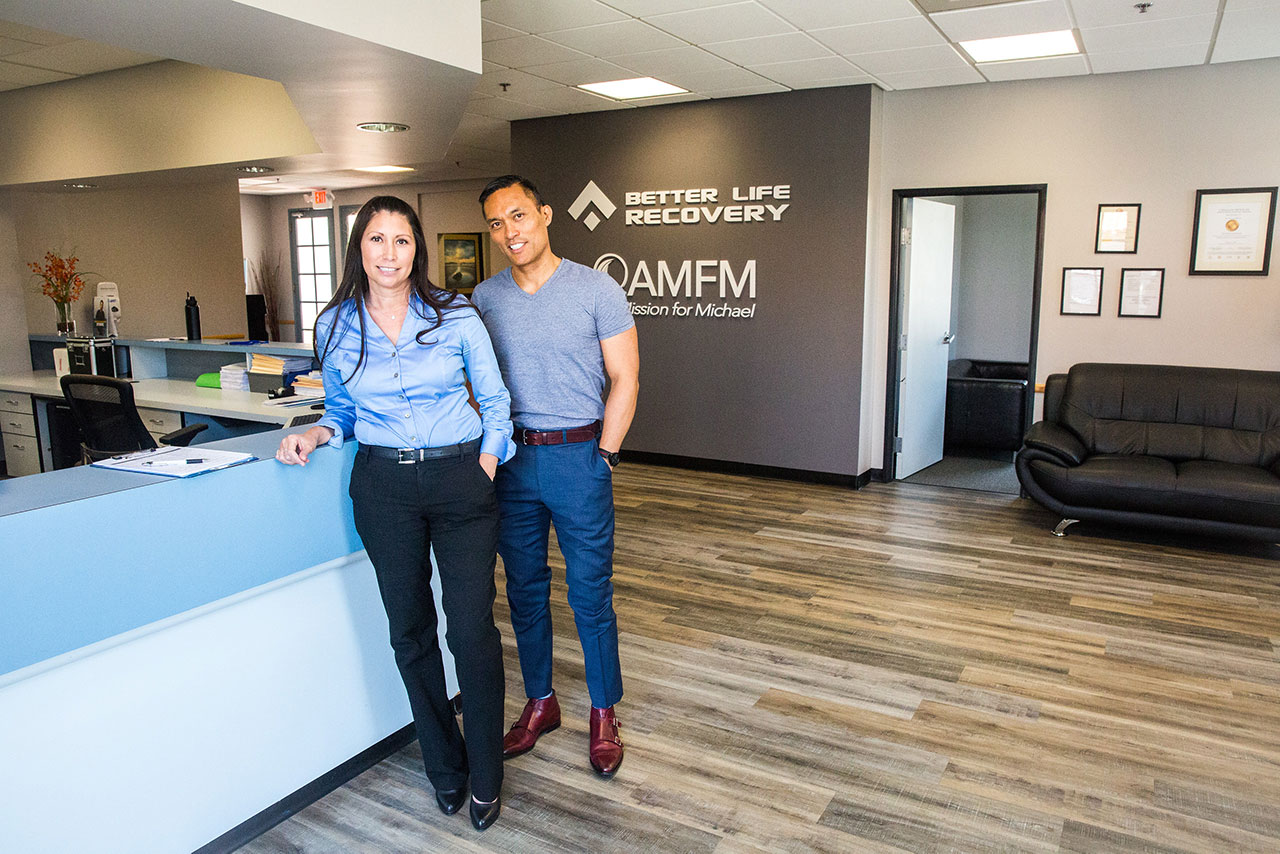
What ties it all together is our 1:2.5 staff-to-client ratio. We ensure that every patient gets individualized attention during their treatment at A Better Life Recovery.
What to Expect in Treatment
Your time at A Better Life Recovery begins with a comprehensive assessment in which we discuss your history of stimulant use and any co-occurring conditions. You also go through a thorough ADHD screening at this stage.
From there, our medical team will take the steps needed to stabilize you from acute drug withdrawal.
The core of our program is residential treatment that runs for 30-90 days. Each day, you get to attend individual therapy sessions, group therapy, and structured skill-building sessions.
And before you leave the facility, we build you a thorough aftercare plan to manage your ADHD symptoms.
Insurance and Admissions
A Better Life Recovery accepts most major insurance plans. Our admissions team will handle a free, confidential insurance verification on your behalf, so you understand your coverage before making any decisions.
Once your insurance is verified, you will be offered same-day admission with zero pressure. We proudly serve clients from all across Orange County and Southern California.
Frequently Asked Questions
If you’re considering prescription stimulant addiction, it’s normal to have some questions about the process, even after the information on this page. To help, we’ve provided the following answers to FAQs we commonly receive.
Can You Become Addicted to Adderall if You Have ADHD?
Unfortunately, yes. People with ADHD taking stimulants as prescribed carry a lower addiction risk than recreational users. But you can still develop an addiction if you escalate your doses beyond what was prescribed.
How Will I Manage My ADHD Without Stimulants?
Our psychiatrist will build you a personalized plan using non-stimulant medications like Strattera, Wellbutrin, or Intuniv, alongside behavioral strategies, ADHD coaching, and organizational systems.
Is Prescription Stimulant Addiction Different From Meth or Cocaine Addiction?
The brain chemistry is largely the same since all stimulants hijack your dopamine system. However, prescription stimulant addiction mostly occurs due to a prescription or performance pressure rather than recreational use.
What Does Adderall Withdrawal Feel Like?
Adderall withdrawal symptoms include fatigue, low mood, brain fog, difficulty functioning without the medication, increased appetite, sleep disturbances, and mood swings. Withdrawal is rarely medically dangerous, but it can become highly uncomfortable.
I Use Adderall for Work/School Performance. Is That an Addiction?
If you use Adderall without a prescription, take it more than prescribed, or find it genuinely difficult to function without it, then you may have an addiction. We offer free, confidential assessments to help you understand exactly where you stand.
Does Insurance Cover Prescription Stimulant Addiction Treatment?
Yes. Under the Mental Health Parity Act, all insurance plans are required to cover substance use disorder treatment, and that includes prescription stimulant addiction. You can call us for a free, confidential insurance verification, and we will walk you through your benefits.
References
- Han, B., Jones, C. M., Volkow, N. D., Rikard, S. M., Dowell, D., Einstein, E. B., Guy, G. P., Tomoyasu, N., Ko, J., Baldwin, G., Olsen, Y., & Compton, W. M. (2025). Prescription Stimulant Use, Misuse, and Use Disorder Among US Adults Aged 18 to 64 Years. JAMA Psychiatry. https://doi.org/10.1001/jamapsychiatry.2025.0054
- Lopez, M. J., & Tadi, P. (2023, July 30). Drug Enforcement Administration Drug Scheduling. PubMed; StatPearls Publishing. https://www.ncbi.nlm.nih.gov/books/NBK557426/
- Compton, W. M., Han, B., Blanco, C., Johnson, K., & Jones, C. M. (2018). Prevalence and Correlates of Prescription Stimulant Use, Misuse, Use Disorders, and Motivations for Misuse Among Adults in the United States. American Journal of Psychiatry, 175(8), 741–755. https://doi.org/10.1176/appi.ajp.2018.17091048
- IQVIA Government Solutions Inc. (2024, November 13). Stimulant prescription trends in the United States from 2012–2023. U.S. Drug Enforcement Administration. https://www.deadiversion.usdoj.gov/pubs/docs/IQVIA-Report-on-Stimulant-Trends-2024.pdf
- Miller, J. (2023, July 29). Prescription Stimulant Addiction Statistics. Addiction Help. https://www.addictionhelp.com/prescription-stimulants/statistics/
- SAMHSA. (2023). 2023 NSDUH Annual National Report | CBHSQ Data. Samhsa.gov. https://www.samhsa.gov/data/report/2023-nsduh-annual-national-report
- Kim, J., Kwak, J., Jeong, H., Kim, N. J., Lee, S.-Y., Kim, Y., Kim, J., Han, S., Chun, H., Park, K. J., Lee, S.-B., Kim, G., Lee, H. K., & Yim, H. W. (2025). Efficacy of cognitive behavioral therapy for stimulant use disorders: a systematic review and meta-analysis. Frontiers in Psychiatry, 16. https://doi.org/10.3389/fpsyt.2025.1695702
- Coughlin, L. N., Tomlinson, D. C., Zhang, L., Kim, H. M., Frost, M. C., Khazanov, G., McKay, J. R., DePhilippis, D., & Lin, L. A. (2025). Contingency Management for Stimulant Use Disorder and Association With Mortality: A Cohort Study. American Journal of Psychiatry. https://doi.org/10.1176/appi.ajp.20250053
- U.S. Department of Health and Human Services, Office of the Assistant Secretary for Planning and Evaluation. (2024, November 7). Contingency management for the treatment of substance use disorders: Enhancing access, quality, and program integrity for an evidence-based intervention. https://aspe.hhs.gov/sites/default/files/documents/a0cc6fcdb2968be95f60bb1c2c94eb70/contingency-management-sub-treatment.pdf
- Rohner, H., Gaspar, N., Philipsen, A., & Schulze, M. (2023). Prevalence of Attention Deficit Hyperactivity Disorder (ADHD) among Substance Use Disorder (SUD) Populations: Meta-Analysis. International Journal of Environmental Research and Public Health, 20(2), 1275. https://doi.org/10.3390/ijerph20021275
Begin Your Recovery Journey Today
Are you ready to reclaim your life? Taking the first step is often the hardest, but we make it simple. We offer multiple ways for you to begin your journey. You can:
- Schedule a free, confidential consultation
- Contact our Orange County rehab centre online or through our 24/7 helpline
- Arrange a private tour of the facility
- Verify your insurance coverage for free
Let us support you toward long-lasting recovery. Reach out to us today.
CONTACT NOW


info@abetterliferecovery.com

Address
30310 Rancho Viejo Rd.
San Juan Capistrano, CA, 92675
WE ARE FULLY LICENSED AND ACCREDITED